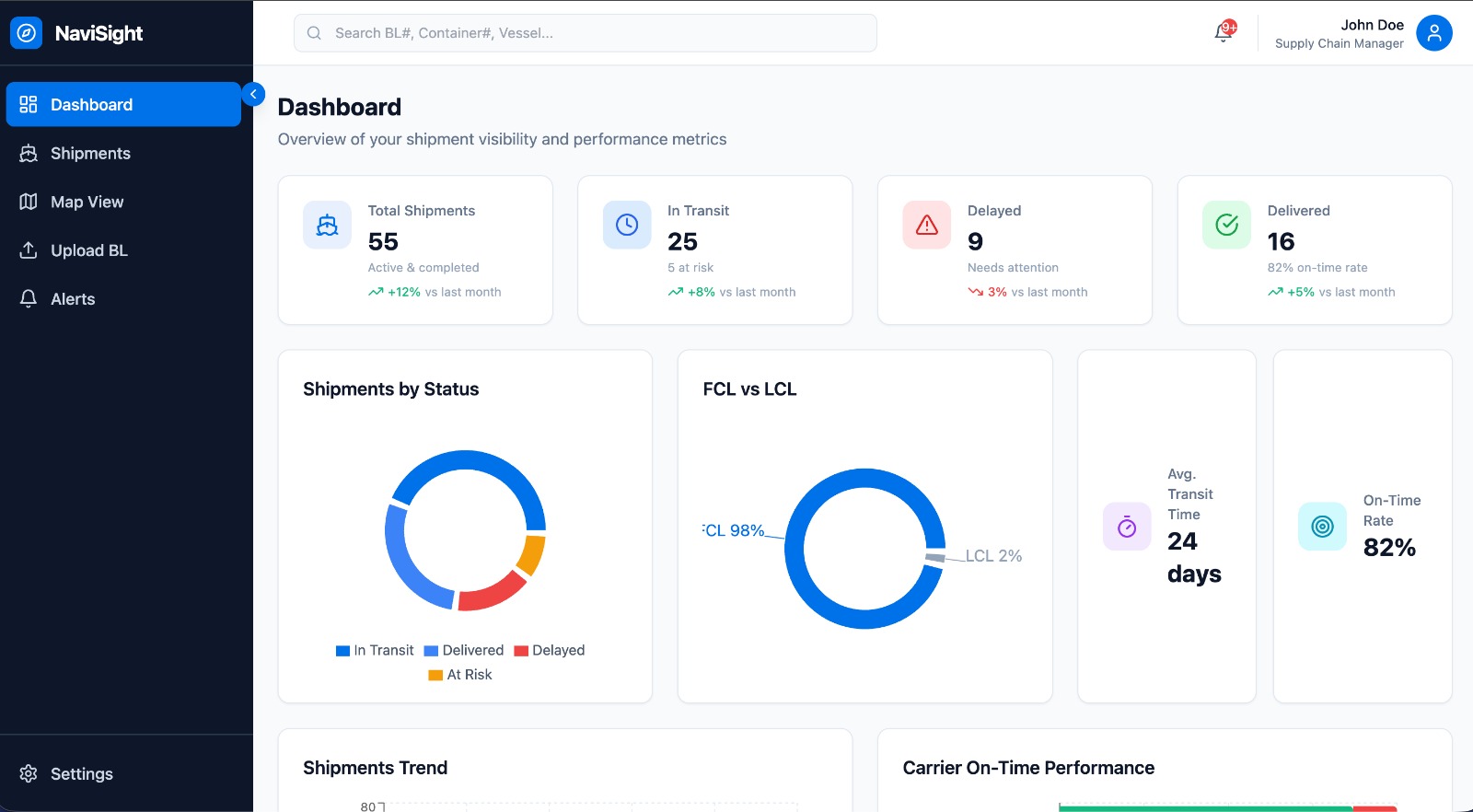
Global supply chains are complex and fragile. When a container is delayed halfway across the world, the ripple effects hit production lines, inventory, and customer commitments — often without warning.
- Tracking shipments meant logging into multiple carrier portals manually
- Bills of Lading (BLs) were scattered across emails and spreadsheets
- No visibility into why delays happen or what they impact
- Production teams found out about material delays too late
- Customer delivery promises were broken before anyone knew there was a problem
- ETA predictions from carriers were unreliable and static
Businesses needed a single source of truth — not just where shipments are, but what happens downstream when they're late.